

UK Onshore #1: Rise of the Oil and Gas Industry
- Ollie Button
- Jun 28, 2021
- 4 min read
Updated: Jul 13, 2021
This blog series is an extended version of my published article by Geo Expro (Vol. 18, No.3, p60), which can be accessed by clicking the button below:
Series Introduction: UK Onshore Oil and Gas
Believe it or not, but there there are undoubtedly under-explored, deep-seated accumulations of oil and gas still present below mainland UK. However, with a predominance in offshore operations, and a welcomed transition to sustainable energy, would it be wise to invest in domestic exploration for onshore oil and gas?
For my MSc project during the summer of 2020, I reviewed and compiled publicly accessible corporate data (reports, wells, and geophysical records), and produced a document that discussed the prospectivity of onshore hydrocarbon systems within the UK Palaeozoic, some 540 to 250 million years ago.
Although broad and extensive, my thesis strung together a complex array of concepts and commercial prospects; many of which were overlooked and under-explored by the industry.
Based on my project, this blog series will highlight past and present exploration, production, and the remaining potential for onshore oil and gas in the UK Palaeozoic. I also hope to demonstrate how, and why, continued exploration for domestic oil and gas may result in a cleaner transition to our 'Net Zero' goals.
So, look out for subsequent posts on the Midland Valley of Scotland, Northeast England, Northwest England, the East Midlands Province, the West Midlands, and Wales.
Before we get carried away, however, let's start at the beginning - the rise of the oil and gas industry.
The Beginning: Fuelling an Industrial Revolution
In 1851, wide seams of organic-rich shales were discovered in West Lothian, Scotland. As an innovative chemist, James Young discovered how to distill oil from shale. This fired up the industrial revolution and sparked the oil and gas industry.

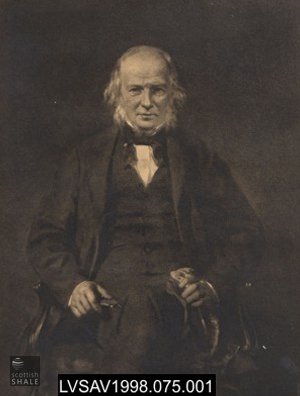


By 1913, Scottish oil peaked at 6000-barrels a day (UKOOG 2013). Demand doubled during WWI, and the government introduced the Petroleum Act of 1918. Funded exploration for conventional hydrocarbons led to discoveries in the Midland Valley of Scotland and on the anticlinal flanks of the Derbyshire Dome.


G.M. Lees, head of exploration for the former BP (D'Arcy), recommended the Petroleum Act of 1934 under geological reasoning, and UK onshore oil and gas was nationalised.
At the start of WWII, D’Arcy Exploration noted minor oil accumulations within Pleistocene clays along the Lancashire Coast, and the Formby Oilfield was discovered (Kent 1985). This was soon over-shadowed by discoveries in the East Midlands, where petroleum shows within concealed coalfields in and around the Ollerton Anticline (Kent 1938) led to the discovery of the Eakring Field (Dewhurst 1940).


The East Midlands Province was vital for the UK during WWII, and the production of hydrocarbon-bearing Carboniferous interbeds and Permian limestones continues to the present day. With over 30 commercially viable fields present, the province contains the UK’s largest onshore gasfield (Saltfleetby) and second-largest oilfield (Welton).
After the war, technological advances in seismic revolutionised onshore exploration. 25 deep-seated discoveries across Nottinghamshire, Yorkshire, Lancashire, and Scotland accounted for 3000 barrels a day (UKOOG 2013). In 1959, the UK produced 80,000 tonnes of oil from the East Midlands Province alone (Morton 2014).

The UK Continental Shelf Act of 1964 saw a boom in offshore operations, and with tough competition from Middle Eastern import, onshore exploration was deemed less favourable.
Despite this, large Mesozoic systems were discovered in Dorset. For example, Wytch Farm (1973) soon became Europe’s largest onshore oilfield in Western Europe.
The oil price significantly rose in 1979, and the first official onshore licensing round was held in 1985. With a rise in UK onshore exploration and production, legislation was later revised into the Petroleum Act of 1998.
By 2013, 1800 wells had been drilled; 300 operating wells across 120 sites produced in excess of 20,000-barrels of oil equivalent per day.

The Future: Securing a Sustainable Transition?
In 2014, 21 operators were offered landward licenses across the UK. To date, only 14 onshore licensing rounds have taken place. The decision to devolve onshore licensing authority to the Scottish and Welsh ministers was made in 2018, but at the time of this article, the 15th UK onshore licensing round is yet to be held.
Continued exploitation of oil and gas in the UK will always come with controversial stigma and a 'NIMBY' (Not In My Back Yard) attitude... not to mention technical risks and commercial challenges.
To keep up with consumer demand, the UK is highly dependent on imported fossil fuels. However, with investment in domestic exploration, our reliance on import could be reduced.
Furthermore, with an increased supply of domestic reserves, the UK national grid may become self-sufficient, and the welcomed transition to renewable energy will be economically secure, climatically cleaner, and geopolitically safer.
In short, the UK onshore Palaeozoic may provide an opportunity to cover demand and reduce our reliance on import. A stable, self-sufficient supply of energy will strengthen our stance to transition towards a greener, sustainable future.
Thanks, and feel free to share your comments.
Ollie
References and Extra Reading
Publicly available industry reports available in the UK Onshore Geophysical Library at: https://ukogl.org.uk/
DECC, 2013. “The Hydrocarbon Prospectivity of Britain’s Onshore Basins”. Promote UK 2014
Dewhurst, 1940. “The Eakring Field”. 23rd March 1940, UKOGL.
Kent, P.E., 1985. “UK onshore oil exploration, 1930–1964”. Marine and Petroleum Geology, 2(1), pp.56-64.
Kent, P.E., 1938. “Note on the Structure of the Ollerton District”. 11th April 1938, UKOGL.
Morton, M.Q., 2014. “’What Oilfields’ Onshore Oil in the UK”. GEO ExPro, Vol. 11, No.3.
UKOOG, 2013. “Onshore Oil and Gas in the UK”. Issue 1


Comments